Residential Versus Commercial AC Repair in Orem: University Parkway Corridor and Riverwoods Business Service Requirements
AC repair in Orem UT is not one-size-fits-all. Residential systems across central Orem, the east bench, and the UVU area face different service realities than the rooftop and split commercial systems that line the University Parkway corridor and the Riverwoods Corporate Center near Provo Canyon. Elevation, building type, and usage patterns change how systems fail, how technicians test, and what a reliable repair looks like. This article sets clear expectations for both property types so owners can make fast, informed decisions during peak Utah Valley heat.
Why Orem Properties See Different AC Failures Than Neighboring Markets
Orem sits at roughly 4,775 feet with the valley floor running hotter in July and August and the east bench running a few degrees cooler due to airflow off Provo Canyon. Air density is lower at this elevation. That reduces heat transfer across coils and forces longer run cycles to meet setpoints. The practical effect is measurable. Utah Valley altitude derates air conditioner capacity by about 2 to 3 percent per 1,000 feet. That means an AC nameplated at 4 tons can deliver only about 3.4 to 3.5 tons under Orem design conditions. The same unit at sea level would work less to do the same job. This one fact explains a high percentage of Orem’s mid-summer service calls for weak airflow, no cool, frozen evaporator coils, and hard-start compressors.
Neighborhoods along University Parkway from State Street to I-15 cluster dense parking lots and roof surface area that trap heat in late afternoon. Condenser entering air temperatures commonly test a few degrees hotter than readings from shaded residential backyards. That heat load widens the gap between nameplate and real output just as businesses hit their occupancy peaks. The combination drives a repair pattern that tilts commercial calls toward condenser coil fouling, fan motor stress, and capacity complaints during the 3 p.m. To 6 p.m. Window when utility demand spikes.
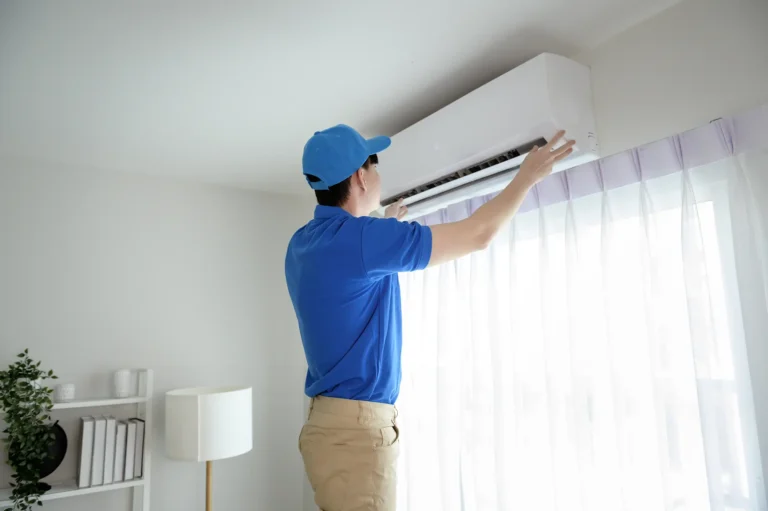
Residential AC Repair in Orem: What Technicians See House to House
Single-family AC repair across Orem is anchored to the housing stock. Central Orem and the Sharon neighborhood include many 1950s and 1960s ranch homes with older sheet metal trunks and undersized return air. Windsor, Westmore, and the UVU area include large numbers of 1970s and 1980s split-levels with standard-efficiency furnaces and aging condensers. Cascade, Suncrest, Canyon View, and Northridge include 1990s through recent east-bench construction, often with zoning and smarter controls. Each archetype creates its own failure profile.
On a typical 2,000 to 2,800 square foot split-level in 84057 or 84058, a no cool complaint in late July often traces to three root causes in this order. First, a failed capacitor or contactor after repeated hard starts during long late afternoon cycles. Second, a low refrigerant charge that was never set to altitude-adjusted superheat and subcool targets. Third, a dirty condenser coil loaded with dust from Utah’s dry climate and roadside debris stirred by University Parkway traffic. These three causes present similar symptoms to homeowners. Correct diagnosis requires a refrigerant pressure check, superheat and subcool measurement, microfarad testing on the capacitor, compressor amp draw, and a coil visual that includes fin density and matting.
East bench homes in 84097 with multi-zone systems see a different pattern. A stuck zone damper or miscalibrated thermostat can mimic a capacity failure. Airflow imbalance forces the evaporator coil to run below target temperature for longer stretches. That invites freeze-ups and water down the condensate drain line that later clogs. Houses that sit exposed to canyon winds on Cascade or Suncrest peaks drive more filter changes due to yard dust and spring pollen, which means the coil stays cleaner and the blower motor runs closer to design. Failures in that slice of Orem more often involve electronics, low-voltage shorts, and control board faults than a basic capacitor swap.
Shareable local finding: Orem altitude drives compressor replacements that look premature at sea level
Compressor replacement cost in 2026 runs roughly 1,200 to 3,500 dollars for most residential systems, with 4 to 5 ton equipment and inverter compressors reaching higher. In Orem’s elevation, compressors run hotter and cycle longer during July peaks, which raises failure rates in years 8 through 12 compared to the same brand and model at sea level. That is not a brand problem. It is physics. The difference shows up most often on west-facing homes along the Orem Mall area and University Place where late-day solar gain lifts indoor load as the utility peak hits. Owners who schedule coil cleaning and verify charge against altitude-adjusted targets see better compressor life. This is specific to Utah Valley and is a point local publications and real estate blogs should flag when they discuss AC life expectancy here.
Commercial AC Repair Along University Parkway and Riverwoods Corporate Center
Commercial service across the University Parkway corridor and Riverwoods Corporate Center mixes packaged rooftop units, air handlers with remote condensers, split systems sized 10 to 25 tons, and controls that range from stand-alone thermostats to building management systems. Business hours, space type, and tenant load shape the repair plan more than brand. Restaurants at University Place and retail suites along State Street face heavy door cycling and heat from kitchen equipment or display lighting. Office users at Riverwoods often run higher outside air percentages to meet ventilation codes, which stresses economizers and drives belt and motor wear.
Common commercial failures in this corridor cluster around three areas. First, economizer faults that lock out free cooling or stick dampers at improper positions. Second, condenser coil fouling on rooftop units that takes longer to notice than on a ground-level residential condenser. Third, blower belt failure or bearing wear that moves from a hum to a screech and then to a no airflow event if not serviced. Capacity complaints on a hot weekday afternoon often ductless mini split repair land at the same endpoint as residential, but commercial timelines run shorter because occupant load and ventilation requirements push equipment harder at peak.
Diagnostics for commercial calls include pressure testing with altitude adjustment, superheat and subcool, fan amp draw, vibration and bearing checks, refrigerant leak detection, and full economizer commissioning. Repairs in a retail or medical setting near Timpanogos Regional Hospital or along the UVU edge also need plan-ahead scheduling to keep sensitive operations running. It is common to stage repairs outside of customer hours or sequence work by zone to keep lobby and cash wrap areas conditioned while back rooms wait for parts.
Riverwoods and Provo Canyon airflow create microclimate service calls
Riverwoods Corporate Center sits near Provo Canyon where afternoon canyon winds and cooler evening air produce short but sharp load changes. Rooftop systems that run free-cooling economizer cycles can swing from 100 percent mechanical cooling in late afternoon to partial outside air cooling on the same night. Units that are poorly tuned waste compressor life and run too cold, which creates humidity complaints and coil frost. The correct repair is often a control recalibration rather than a parts swap. Technicians should verify outside air sensor accuracy and damper response times under those exact conditions, not just in a shop setting.
Diagnostics That Work at 4,775 Feet: What Changes and What Does Not
Pressure and temperature targets do not match sea-level charts. Residential and commercial technicians who test in Orem use altitude-corrected readings to set charge and to assess expansion valve performance. Superheat, subcool, and head pressure must be read in context. A system that looks undercharged at sea level can sit ductless ac repair within spec here when read against altitude-adjusted tables. The reverse is also true. A unit that appears to be within range can be low when adjusted for air density. Misreading these numbers is a common reason for repeat callbacks after a quick repair done during a heat wave.
Electrical testing follows the same logic everywhere, but hard starts show up more often in Orem because compressors work under higher relative load. Capacitor microfarad readings that float at the low end of tolerance produce more dramatic symptoms under Utah Valley conditions. A borderline 40 microfarad run capacitor can tip into hard starts on a 95 degree day in 84058 even if it ran last summer. Residential systems see the problem sooner because condenser fan motors and compressors sit close to landscaping dust and cottonwood fluff. Commercial rooftop systems see it later, but the failure window is similar.
Airflow and duct issues in Orem’s older stock
Many 1950s and 1960s ranch homes around Sharon and Aspen still run on original or lightly modified ductwork. Return air is undersized and filter racks sit in awkward places that encourage bypass. Undersized return drives low evaporator temperature and coil freeze-ups during long cycles. A frozen evaporator coil can mimic a refrigerant leak. A good repair in this context often includes return-side duct improvement or at least a discussion about Manual D corrections. Without that fix, a capacitor swap or refrigerant top-off solves the symptom but not the cause. Airflow is mechanical math. At this elevation, it is unforgiving.
Special Considerations for Mixed-Use and Campus Properties Near UVU
The UVU area blends student housing, small retail, classrooms, and administrative spaces inside 84058 and 84057 zip codes. Mixed-use properties stack loads that peak at different times. Student housing leans late-night cooling. Classrooms and admin offices peak mid-day. Retail sees late afternoon spikes. A single mechanical system that tries to cover mismatched schedules pushes toward short cycling and customer complaints even if the equipment is new and within spec. Zoning, thermostat placement, and schedule programming matter as much as component health.
Repair visits in these buildings commonly include thermostat reprogramming, occupancy sensor checks, and a deeper review of zoning actuator performance. Variable speed blowers and two-stage or inverter compressors help flatten the peaks, but only if controls and airflow match the building’s schedule. Owners that request a straight parts swap during a heat wave can save a day, but they often invite a second visit the next week for the same symptom. A focused diagnostic that includes schedule and zoning review avoids this loop and usually pays back in lower run time and lower power bills during July and August.
The University Parkway Corridor Repair Calendar
Late June through the third week of August is peak residential AC repair in Orem. The date range slides a little in cooler years, but the pattern holds. Valley floor heat in 84057 and 84058 pushes equipment during the late afternoon. East bench homes in 84097 feel it less, but capacity loss at altitude keeps systems honest. Commercial service calls along University Parkway cluster on weekday afternoons and early evenings when occupant load and trapped asphalt heat overlap. Saturday calls tilt toward retail and restaurants. Riverwoods peaks on weekdays with office occupancy.
Owners who plan maintenance in March through early May reduce emergency calls during the peak by a noticeable margin. A verified charge, clean coils, a working condensate drain line, and healthy capacitors remove most of the landmines. For commercial users, economizer checks and belt replacement during the shoulder season prevent many mid-summer capacity calls. The Wasatch Front produces sharp seasonal edges. Tune-ups that hit those edges keep equipment inside its design envelope longer.
AC Repair Symptom Patterns Across Orem Neighborhoods
In central Orem near Scera Park and the Orem Public Library, cottonwood release and yard dust push condenser coil cleaning higher on the list. In the Orem Mall and University Place area, hot parking lots add two to four degrees to condenser entering air on still afternoons, which shortens the path to high head pressure shutdowns and fan motor overheating. On the east bench in Cascade and Suncrest, cool nights and canyon winds can set up morning coil frost when thermostats hold lower setpoints. Each setting looks different to the homeowner, but the diagnostic path converges on airflow, refrigerant charge, and electrical health.
Zip code 84059, which carries Orem PO addresses and nearby growth corridors, adds construction dust to the mix. Filters load faster and blower wheels collect a fine layer of silt that reduces CFM even when the filter is new. Residential and light commercial systems here benefit from an extra mid-season filter change and a blower wheel cleaning if the system starts to sound like a faint turbine. That sound is airflow restriction moving the blower off its efficiency curve.
Residential Versus Commercial: What Changes in the Repair Playbook
The repair decision tree shifts with building type. Residential owners value same-day resolution, system life, and utility cost. Commercial owners value uptime, predictable scheduling, and compliance with ventilation and code. Both groups need diagnostics tuned to elevation, but the action plan differs.
Residential decisions sit close to the repair-versus-replace line because many homes in 84057 and 84058 run 15 to 20 year old condensers paired to earlier generation furnaces. A compressor failure on a 17 year old 10 SEER system is a different decision than a failed capacitor on a 6 year old 14 SEER2 system. The choice is math that includes remaining service life, parts availability, and the altitude-derated capacity that stresses older equipment. A 4-ton system that delivers 3.4 to 3.5 tons in Orem might have been oversized on paper when installed. That same system can feel undersized today because envelope upgrades never happened and occupant loads grew. A like-for-like compressor replacement might solve a short term problem while leaving the real capacity gap in place.
Commercial owners on University Parkway and at Riverwoods face operations windows. Rooftop units often serve multiple tenants. Repairs need coordination with building management and sometimes with a building automation system. Economizer commissioning can produce bigger comfort gains and lower utility bills than a parts swap. Properly tuned economizers use Orem’s drier evening air to cool spaces without compressors. A failed or locked economizer burns compressor life and pushes power bills higher by a margin that shows up on utility bill graphs during July.
Technical Standards and Codes That Govern Repairs in Orem
AC repair must comply with the Utah State Energy Code and the 2024 International Mechanical Code as adopted locally. Refrigerant handling requires EPA Section 608 certification. Technicians working on R-410A and transitioning systems with A2L refrigerants such as R-454B must follow manufacturer and code requirements for recovery and charging. The 2025 to 2026 refrigerant transition in new equipment means some replacement components differ from legacy units, and line set work or component compatibility checks are part of responsible repair planning.
New or replacement condensing units must meet SEER2 minimums under Utah’s Northern climate zone rules. Although a repair does not trigger a full efficiency upgrade, owners who move from repair to replacement can qualify for Rocky Mountain Power Wattsmart incentives when selecting high-efficiency air conditioners or heat pumps that meet program thresholds. In recent program years, qualifying heat pump conversions earn higher incentives than straight AC replacements. Federal 25C tax credits may apply to certain high-efficiency installations, with central AC credits up to 600 dollars and heat pump credits up to 2,000 dollars when efficiency criteria are met. Those incentives do not apply to simple repairs, but they influence the repair-versus-replace conversation when major components like compressors or coils fail.
Parts, Components, and the Orem Reality of Lead Times
Common repair parts such as capacitors, contactors, and fan motors remain same-day in most cases. Compressors, evaporator coils, and control boards can require a day to a week depending on brand, model year, and supply chain timing. Carrier, Trane, Lennox, Rheem, Goodman, American Standard, York, Bryant, and Bosch heat pump parts move fastest when the model number is clear, the serial number is legible, and the system has not passed into an end-of-line series with discontinued components.
Mini-split systems from Mitsubishi Electric, Daikin, and LG serve a growing number of Orem east bench homes that lacked ductwork or wanted specific-zone control. Inverter boards and proprietary sensors on those systems often require specific diagnostic tools and brand training. Failures can look like a classic refrigerant leak or like an airflow issue until a board error code reveals the control side. A proper mini-split repair in Orem includes flame rod or sensor cleaning for heat pump models, electronic leak detection, and a check of condensate pumps that fail more often in Utah’s dry summers than in humid climates due to infrequent wet cycles.
Commercial Rooftop Units: What Owners Should Expect During a Repair
Owners along University Parkway and at Riverwoods Corporate Center should expect a rooftop access plan, lockout-tagout for any high-voltage work, and a documented diagnostic that logs temperature splits, superheat, subcool, economizer positions, and blower amp draws. Belt checks, bearing lubrication or replacement, and a coil cleaning that includes both sides of the condenser coil are standard. Rooftop coils trap debris between coil layers. A surface rinse restores appearance but not heat transfer. Proper coil cleaning separates earned capacity gains from cosmetic work.
Repairs that disrupt operations during peak hours should be staged. Restaurants and retail need conditioned front-of-house from noon through evening. Offices want morning comfort and steady indoor air quality through late afternoon. A competent contractor sequences repairs so that building areas stay in service while the team works through the punch list. This might include portable cooling for small suites or a zone rotation plan that gives each tenant time on mechanical cooling while the repair proceeds two zones at a time.
Indoor Air Quality During Repairs in the Wasatch Front
Wasatch Front inversion season from December through February produces PM2.5 readings that regularly exceed the EPA 24-hour health standard of 35 micrograms per cubic meter. While that is a winter story, its residue and the valley’s dry climate load residential and commercial filters faster in spring and summer. During AC repairs, especially coil openings or blower work, filter upgrades and duct cleaning may be appropriate. MERV 13 filtration is a widely accepted minimum for better particulate capture in homes and offices where the HVAC system can handle the added resistance. Systems that cannot handle MERV 13 should not be forced into it. In those cases, a whole-home HEPA bypass or an air purifier can provide results without choking airflow.
Cost Ranges and Timelines Orem Owners Ask About
Prices vary by brand, access, and system size, but local ranges help plan. Diagnostic dispatch fees generally run 80 to 150 dollars across Utah County and are often applied to the repair. Capacitor and contactor replacements usually fall between 150 and 400 dollars. Fan motors often range 300 to 800 dollars. Condensate drain cleaning runs 75 to 250 dollars depending on access and severity. Refrigerant leak detection and recharge can span 250 to 1,500 dollars depending on the leak location and charge size. Compressor replacements range from 1,200 to 3,500 dollars for most residential systems, with larger or inverter models higher. Commercial repairs depend on tonnage and rooftop access but often parallel residential component costs times the number of stages and units.
Same-day repair is normal for simple electrical failures and minor airflow blockages. One to three days is typical for parts that local supply houses stock lightly during peak summer. Week-scale timelines appear when coils, compressors, or brand-specific electronic boards are on backorder. Owners who authorize altitude-correct diagnostics on the first visit see fewer return trips and shorter downtime because the initial repair targets the true cause rather than the most obvious symptom.
What Makes AC Repair in Orem UT Shareable and Worth a Second Look
The altitude derating figure matters. Orem’s 4,775-foot elevation reduces real cooling output by roughly 14 to 15 percent from the nameplate rating, which is a shareable statistic that explains many local comfort complaints and compressor failures. Add a University Parkway heat island effect of a few degrees to condenser entering air in late afternoon and it is easy to see why equipment that looked oversized on a blueprint runs short in July. Real estate agents and local publications that explain this effect help buyers set better expectations and encourage tune-ups that add years to system life.
Plumbing and HVAC Together: Why It Matters in Mixed-Use and Older Homes
Orem owners benefit when one contractor holds both HVAC and plumbing licenses. Condensate management crosses trades during AC repair. Drain line routing, traps, and pump selections must follow code. Poorly set condensate pumps fail and cause ceiling leaks in finished basements and commercial suites. The Utah State Plumbing Code governs expansion tanks, drain connections, and any line tie-ins. Aging homes in central Orem with original clay or cast iron laterals also need careful routing of new condensate discharge to avoid leaks and backups. Combined HVAC and plumbing capability cuts errors and reduces the number of site visits needed to resolve both sides of the issue.
Smart Thermostat Behavior at Altitude and in Zoned Homes
Thermostats from Nest, ecobee, and Honeywell Home can help or hurt during peak heat depending on settings. Adaptive recovery and eco modes that look smart on paper can force short cycling or long hold periods that fight the building’s real thermal mass. Zoned homes on the east bench run into these problems when one thermostat responds to a quick canyon breeze while the second still fights sunload on a west elevation. A repair visit that includes schedule tuning can remove two or three service calls later in the summer. The fix is simple. Align thermostat logic and zoning with actual daily load rather than a general algorithm designed for sea-level climates with higher humidity.
Altitude-Adjusted Refrigerant Charging and Leak Strategy
Charge accuracy at 4,775 feet requires superheat and subcool readings tied to local pressure-temperature adjustments. Electronic leak detection helps find the true leak point when a system has run lean for seasons. Dye can help on long line sets in older Orem ranch homes but should not be the first tool. Repairs should include filter drier replacement, a line set flush if the compressor has failed, and a recovery and recharge that stays inside EPA Section 608 rules. As manufacturers transition from R-410A to R-454B and other A2L refrigerants, technicians need to verify component compatibility and use the correct tools for mildly flammable refrigerants. Orem owners should expect that conversation on any major refrigerant-side repair in 2025 and later.
Residential Mini-Split Repair Nuances in Orem
Ductless systems solve tough cooling zones in older Orem homes and in accessory spaces near UVU. Repair calls on these systems often report weak heat in shoulder seasons, which is a heat pump performance question, or water leaks during rare humid spells, which are usually condensate line issues. Inverter boards and sensors on Mitsubishi Electric, Daikin, LG, and other brands need brand-specific reading. A classic sign of restricted airflow on a mini-split is a quiet but persistent whir that rises as fan speed modulates up and down without temperature change. Technicians clear the blower wheel, verify the filter is seated, and inspect the condensate line for kinks. These steps put performance back inside spec and prevent water stains on finished walls and ceilings.
Why Repairs Fail in Orem and How to Avoid Repeat Calls
Repairs fail for predictable reasons. Sea-level charts lead to mischarging. Dirty condenser coils stay dirty because only the outside face gets rinsed. Belts and bearings on rooftop units do not get replaced on schedule. Return air stays undersized across mid-century homes with no conversation about Manual D corrections. Thermostats run algorithms that do not match zoned homes in dry, high-altitude climates. Each of these is solvable with a tighter diagnostic protocol.
On a 2,400 square foot split-level in 84057 with a west-facing backyard condenser, a repeat no cool call after a hot week often comes back to one of three oversights. The previous visit skipped a superheat and subcool check against altitude-adjusted tables. The coil cleaning stopped at a surface rinse. Or a weak run capacitor close to tolerance was left in place. Correcting those three improves reliability. On a University Parkway retail suite, repeat calls usually trace back to an economizer that never closed correctly after a parts swap or a rooftop coil that still held trapped debris. Documenting damper positions and measuring entering and leaving air temperatures across the coil during operation removes guesswork.
Timing Repairs Around Orem’s Real-World Schedules
Homeowners in 84058 near UVU prefer late afternoon visits to reduce time away from work. East bench properties in 84097 often prefer morning windows to avoid heat buildup during the warmest hours if a system needs to be off. Retail and restaurants on University Parkway target repairs overnight or before 10 a.m. Offices at Riverwoods want early morning starts with completion before lunch. Reputable contractors work inside these windows and stage parts so that equipment downtime is short and predictable. Good scheduling is as important as good diagnostics when the heat is on and the phone is busy across Utah County.
What Owners Can Expect From a High-Quality Repair Visit
An effective visit includes a symptom review, altitude-adjusted system readings, airflow checks, electrical tests, and a plain-language summary that ties findings to Orem’s conditions. The technician should tie any repair to expected results. If a capacitor replacement restores compressor starts and the coil is clean, the cooling should return to normal immediately. If the coil remains matted under the surface and the charge is borderline, the report should document residual risk and set a plan. Commercial visits should include photos of rooftop coil faces before and after cleaning, economizer damper positions, and serial tags for any replaced components. Both residential and commercial owners should leave the visit knowing what was fixed, what is borderline, and what the next failure is likely to be if nothing else changes.
Local Landmarks and Corridors Where Repair Nuances Repeat
Utah Valley University’s campus area, University Place, the Orem Mall area, Scera Park, Orem City Hall and the Public Library, and the Riverwoods Corporate Center all share one pattern. Afternoon load spikes match occupancy and parking lot heat. Rooftop units and backyard condensers run at the edge of their real capacity window. When the goal is to make it through August without a major failure, the best move is to keep coils clean, verify charge against elevation, and keep electrical components inside their tolerance band. This does more for reliability than any single brand choice. It is local practice that earns its keep every summer.
Maintenance Schedules That Match Orem’s Climate
Spring AC tune-ups between March and early May align with Orem’s first warm weeks. Coil cleaning before cottonwood and dust take hold gives equipment a running start. Fall furnace tune-ups between September and early November prepare systems for the first cold snap. Utah’s dry air and inversion-season particulates raise the stakes. Semi-annual maintenance is close to a requirement for 10-year-plus equipment that owners want to keep in service. Skipping these visits hands the advantage to the problems that altitude and dust already create. For commercial properties, this calendar includes full economizer function tests, belt changes, and HERS-style duct leakage checks when airflow looks wrong in older suites.
Orem Zip Codes and Neighborhoods Served for AC Repair
AC repair coverage spans Orem zip codes 84057, 84058, 84059, and 84097, with rapid access to University Parkway, State Street, and I-15. Neighborhoods include Central Orem, the UVU area, Orem east bench, Northridge, Cascade, Suncrest, Sharon, Windsor, Aspen, Westmore, Canyon View, and the Orem Mall area. Adjacent communities such as Provo, Lindon, Pleasant Grove, American Fork, and Lehi fall within the regular dispatch map.
Two Quick Lists That Save Time During Peak Season
- Residential AC repair symptoms that deserve same-day diagnostics: no cool, short cycling, frozen evaporator coil, breaker trips, and warm air from vents during late afternoon. Commercial rooftop red flags on University Parkway: economizer stuck alarms, rising kWh during free-cooling weather, belts with visible cracks, condenser coils that look clean on the surface but run high head pressure, and zones that drift more than 3 degrees from setpoint.
Evidence-Based Takeaways for Owners Deciding Between Repair and Replacement
At Orem’s elevation, a 4-ton nameplate acting like a 3.4 to 3.5-ton unit will not mask duct or envelope problems in July. Owners who plan to stay put should pair any major repair decision with an airflow check and a quick look at attic insulation and west-facing glass. A compressor replacement that keeps a borderline system running is a valid short-term choice, but the physics will still define comfort during heat waves. For commercial spaces, an economizer that works correctly can save enough compressor runtime to extend equipment life multiple seasons. In both cases, short, targeted improvements often deliver more real comfort than a like-for-like equipment swap without supporting changes.
Local Proof Points That Matter
Altitude derating of 14 to 15 percent on the Orem valley floor is the most powerful single fact for AC repair planning in Utah County. A second is the documented commercial heat island along University Parkway and at University Place that lifts condenser entering air by a couple of degrees in late afternoon versus shaded residential lots. A third is the winter inversion that loads filters and coils even outside the heating season. These three facts, specific to Orem and the Wasatch Front, explain why a thorough diagnostic and a maintenance plan mapped to local conditions beat guesswork every time.
Why Utah County Homeowners and Businesses Choose a Contractor With HVAC and Plumbing Under One Roof
Coordinating AC repair, condensate management, and any follow-up duct work is faster and safer with one team responsible for both trades. Utah Licensed HVAC and Plumbing Contractor status means the same company can handle refrigerant-side work, thermostat and control updates, condensate drains, and any plumbing code requirements tied to the job. Bonded, insured, and BBB Accredited status adds certainty that the work follows standards owners recognize. NATE-certified technicians and EPA Section 608 certification confirm that refrigerant and electrical work follows national benchmarks. This credential stack stands out in a market where many providers offer only one trade or one narrow slice of service.
Ready for AC repair in Orem UT near University Parkway or Riverwoods
Western Heating, Air and Plumbing serves Orem and Utah County from 235 S Mountain Lands Dr, Orem, UT 84058. BBB Accredited. Utah Licensed HVAC and Plumbing Contractor. Bonded and insured. NATE-certified technicians. EPA Section 608 refrigerant certified. The team repairs central air conditioners, rooftop units, mini-splits, heat pumps, and controls across residential and commercial properties. Altitude-adjusted diagnostics, superheat and subcool verification, economizer commissioning, blower motor and capacitor replacement, condenser and evaporator coil service, refrigerant recovery and recharge, and airflow corrections are routine. Same-day AC repair is available when capacity allows during peak season. Owners on the University Parkway corridor and at Riverwoods can schedule outside business hours to protect operations.
Call +1-385-526-3384 or visit https://westernheatingair.com/service-area/orem-ut/ to request a diagnostic and repair. Service covers Orem zip codes 84057, 84058, 84059, and 84097, with extended dispatch to Provo, Lindon, Pleasant Grove, American Fork, Lehi, Highland, Alpine, Spanish Fork, Mapleton, Springville, and the broader Wasatch Front. Financing is available on approved credit for major repairs and replacements. Manufacturer warranties on installed equipment and workmanship warranties on labor apply per job scope. Background-checked technicians arrive in marked vehicles. Rapid dispatch is available for active HVAC or plumbing emergencies when heat, cold, or water leaks threaten property or comfort.
Western Heating, Air & Plumbing
Orem Regional Facility
📍 Physical Location 235 S Mountain Lands Dr,Orem, UT 84058 📞 Service Hotline (385) 526-3384 Get Directions Orem Webpage 📘 Facebook 📸 Instagram 💼 LinkedIn 📺 YouTube 🛡️ BBB Profile